
How Smart Thermostats Can Lower Your Utility Bills
In Modesto and throughout Stanislaus County, homeowners are all too familiar with the sting of a high energy bill. The summers are intensely hot, forcing air conditioners to run for hours on end. The winters, while milder than in some parts of the country, still bring a deep chill that keeps furnaces working through the night. For most families, heating and cooling account for the largest portion of their monthly utility expenses. It is a necessary cost of living in the Central Valley, but it is often far higher than it needs to be. The culprit is rarely the HVAC system itself but rather the device that controls it. The thermostat on your wall is the brain of your heating and cooling setup. If it is outdated or used inefficiently, it is wasting your money every single hour of the day.
A standard thermostat is a passive device. It waits for a command and then executes it until told to stop. It does not know if you are home or away. It does not know if it is a scorching afternoon or a mild morning. It relies entirely on you to make manual adjustments. The problem is that life is busy. People forget to turn the air conditioning up when they leave for work. They forget to turn the heat down before they go to sleep. These small lapses in memory add up to hundreds of hours of unnecessary runtime over the course of a year. This is where smart thermostats change the game. These devices are not just digital versions of the old round dial. They are sophisticated computers designed to optimize your home’s energy usage without requiring constant attention.
The Flaw of Human Error and Manual Control
The primary reason most homes waste energy is human behavior. We mean well, but we are not consistent. You might intend to adjust the thermostat every time you leave the house, but in the rush of getting kids to school or getting to work on time, it is easy to forget. When this happens, your air conditioner continues to cool an empty house to a crisp 72 degrees while you are sitting in your office. This is energy that you are paying for but never enjoying. It is the equivalent of leaving your car running in the driveway while you are at work.
Even when we do remember, we often make inefficient choices. A common myth is that it is better to keep the house at a constant temperature all day rather than turning it off and on. This is factually incorrect for most systems. It takes far less energy to cool a home down from 78 degrees to 72 degrees once in the evening than it does to maintain 72 degrees for eight hours while the sun is beating down on your roof. A manual thermostat encourages this “set it and forget it” mentality because it is inconvenient to change it constantly.
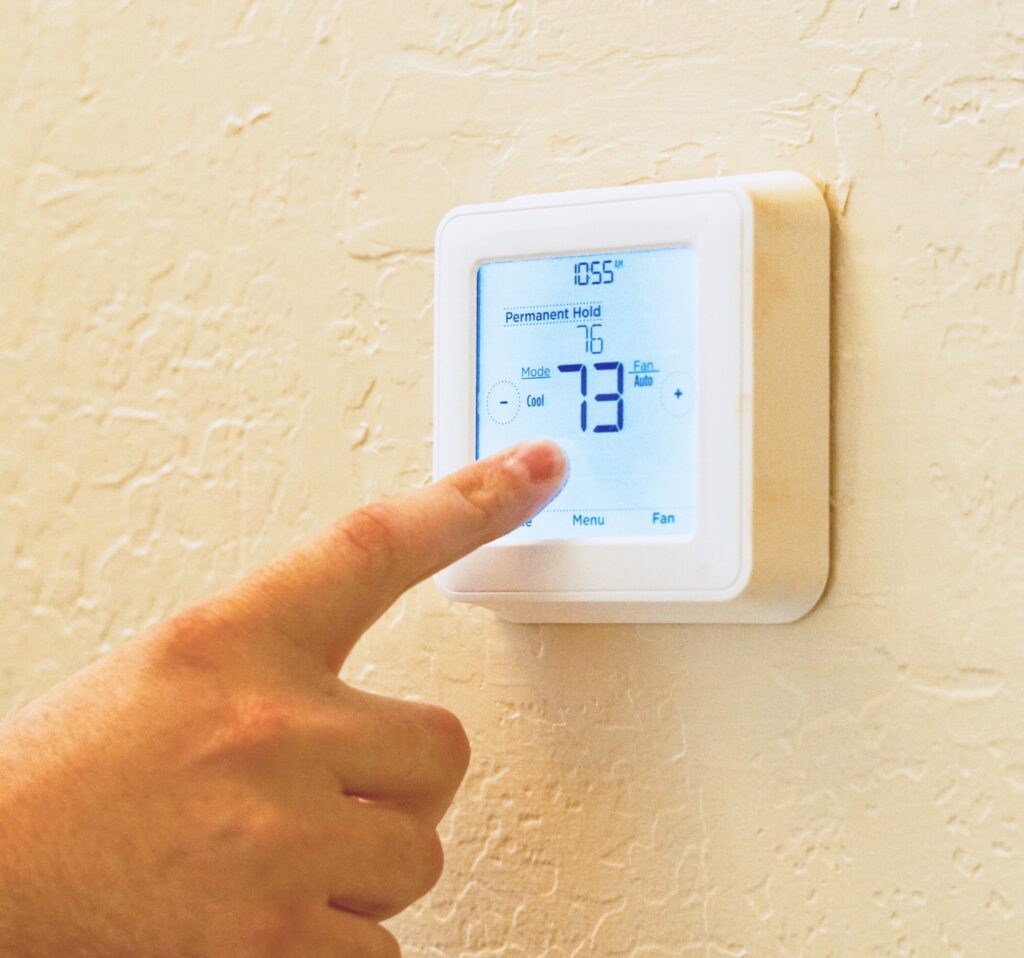
Programmable thermostats were supposed to solve this, but they are often difficult to use. They require you to stand at the wall and press buttons to set complex schedules for weekdays and weekends. If your schedule changes, which it often does, the program becomes useless. Many people with programmable thermostats simply put them on “hold” and use them like manual ones, defeating the purpose entirely. Smart thermostats eliminate this friction. They remove the burden of memory and the complexity of programming from the homeowner.
How Learning Algorithms Optimize Comfort
The most famous feature of modern smart thermostats is their ability to learn. When you first install a smart thermostat, you use it just like a normal one for a week or so. You turn it down when you go to bed. You turn it up when you leave. You adjust it when you feel too hot or too cold. While you are doing this, the thermostat is recording data. It notes the times of day you make changes. It notes the temperatures you seem to prefer. It essentially builds a profile of your family’s life and comfort schedule.
After this initial learning period, the thermostat takes over. It begins to make these adjustments for you automatically. It knows that you typically leave for work at 8:00 AM, so it begins to let the house warm up a few degrees at 8:15 AM to save energy. It knows you usually go to bed at 10:00 PM, so it starts cooling the house down for sleep around 9:30 PM. It creates a schedule that is perfectly tailored to your actual life, not a rigid schedule you guessed at months ago.
Need your thermostat repaired? Click here for our thermostat repair service.
This learning capability is dynamic. If your schedule shifts, the thermostat notices the new pattern and adapts. If you start waking up earlier, it learns that too. This ensures that the schedule is always efficient. It stops the waste that comes from running a heating or cooling schedule that no longer matches your routine. The device is constantly looking for opportunities to save a few minutes of runtime here and there. Over the course of a month, those minutes turn into hours, and those hours turn into noticeable savings on your utility bill.
The Power of Geofencing Technology
One of the most powerful tools for energy savings in a smart thermostat is geofencing. This feature uses the GPS location on your smartphone to communicate with your HVAC system. It creates a virtual perimeter, or fence, around your home. When you cross that perimeter and move away from your house, the thermostat knows you have left. It instantly switches to an “away” mode, adjusting the temperature to an energy saving setting. This happens automatically, every single time you leave, without you ever having to touch the device.
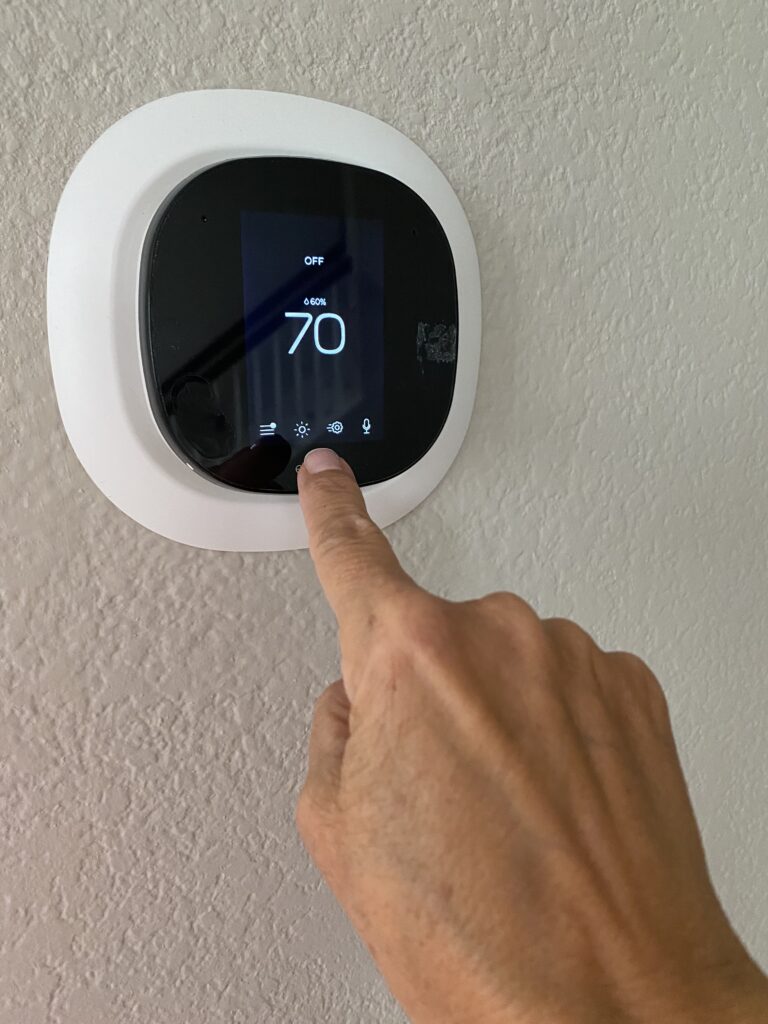
The real magic happens when you return. As soon as you cross the perimeter on your way back, the thermostat knows you are approaching. It wakes up your HVAC system and begins to bring the home back to your preferred temperature. By the time you walk through the front door, the house is comfortable. You get the savings of having the system off while you were gone, but you never have to walk into a hot or freezing house.
This is particularly valuable for families with unpredictable schedules. If you work different hours every day or run errands at random times, a rigid time based schedule does not work for you. Geofencing adapts to you in real time. It does not matter if you come home at 3:00 PM or 7:00 PM; the system responds only when you are actually there. This ensures that you never pay to heat or cool an empty house, maximizing efficiency without sacrificing a single degree of comfort.
Remote Access and Control from Anywhere
There are times when you need to take control manually, and smart thermostats make this incredibly easy. These devices connect to your home’s WiFi network, allowing you to access them through an app on your smartphone, tablet, or computer. You can check the temperature of your home and make adjustments from anywhere in the world. This remote access is a fantastic tool for managing energy costs in unexpected situations.
Imagine you left for a vacation but forgot to adjust the AC before you rushed to the airport. With a standard thermostat, your system would run a normal schedule for the entire week you are gone, wasting a tremendous amount of money. With a smart thermostat, you can simply open the app while waiting at the gate and set the system to vacation mode. You have just saved a week’s worth of cooling costs with a single tap.
Remote access is also helpful for the fluctuating weather we often experience in Modesto. Sometimes a day that starts cool turns into a scorcher. If you have pets at home, you might worry about them getting too hot while you are at work. You can check the app to see the indoor temperature and turn on the AC for a bit to keep them safe, then turn it back up when the house cools down. This precise control means you are only using energy when you make a conscious decision to do so.
Insightful Energy Reports and Usage Data
You cannot manage what you do not measure. Standard thermostats give you zero information about how your system is running. You only find out how much energy you used when the bill arrives at the end of the month. Smart thermostats change this by providing detailed energy reports. These reports show you exactly how many hours your system ran each day. They can show you how your usage compares to the previous month or even how it compares to other efficient homes in your area.
This data allows you to see the direct impact of your choices. You might see that keeping the house at 70 degrees cost you twenty percent more than keeping it at 72 degrees. Seeing this hard data encourages you to make small adjustments that save money. Many apps gamify this experience, awarding you “leaves” or badges for days where you used energy efficiently. This positive reinforcement helps build better habits over time.
These reports can also alert you to potential problems with your equipment. If the report shows that your furnace ran for ten hours on a day where the weather was mild, it indicates something is wrong. The system might be struggling to keep up due to a dirty filter or a mechanical issue. Catching these problems early prevents energy waste and saves you from expensive emergency repairs down the road. The thermostat acts as a diagnostic tool, helping you maintain the health and efficiency of your entire HVAC investment.
Modesto Specific Climate Benefits
The climate in Stanislaus County makes a smart thermostat an even better investment. We have significant temperature swings here. A summer day might hit 100 degrees, but the night might cool down nicely. A standard thermostat simply holds a temperature. A smart thermostat can be programmed to take advantage of these natural swings. You can set it to run the fan only during the cooler morning hours to pull in fresh air, delaying the need for the expensive compressor to kick on.
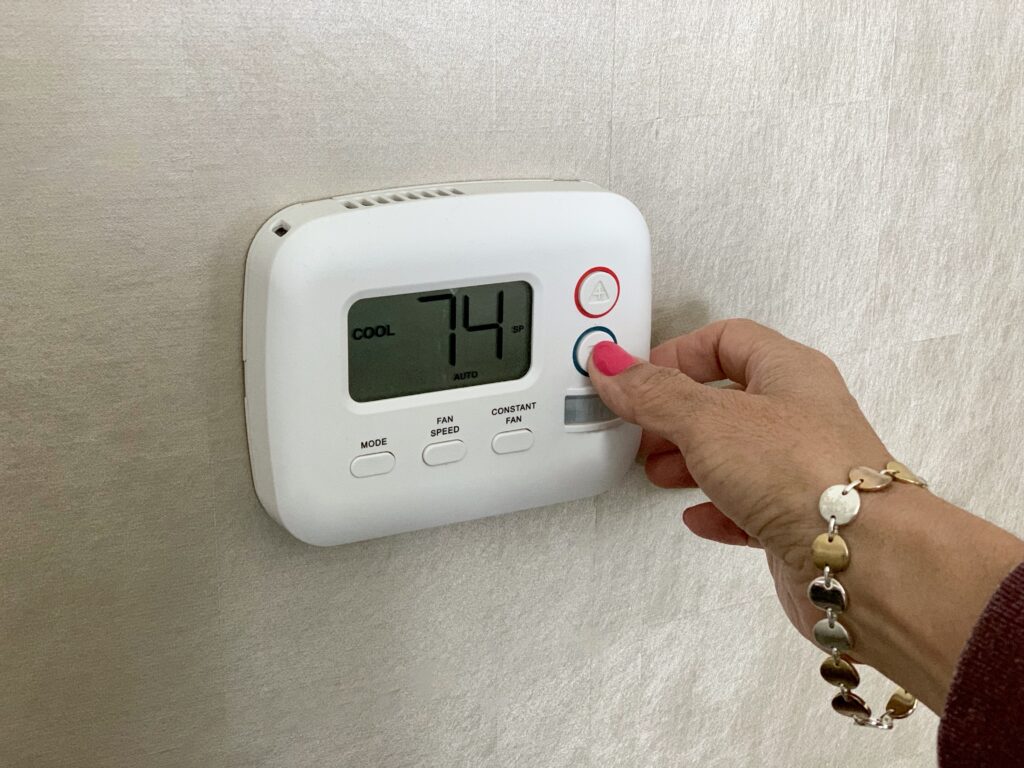
During our winters, the temperature can drop near freezing. Smart thermostats often have features to handle this efficiently. For homes with heat pumps, which are becoming more common in our area, the thermostat plays a critical role. It manages the balance between the heat pump and the auxiliary heat strips. The auxiliary heat is very expensive to run. A smart thermostat uses local weather data to calculate exactly when to switch over, ensuring the auxiliary heat is only used when absolutely necessary.
Furthermore, our local utility companies often have time of use rates. This means electricity is more expensive during peak hours, typically in the late afternoon and evening. Some smart thermostats can be set up to recognize these peak windows. They can pre cool your home during the cheaper hours of the day and then let the temperature drift up slightly during the expensive peak hours. This strategy, known as load shifting, can result in massive savings on your bill without you ever feeling uncomfortable.
The Importance of Professional Installation
While smart thermostats are sold in big box stores, installing one is not always as simple as swapping out a light switch. HVAC systems operate on low voltage wiring, and the color coding is not always standard. Older homes in Modesto often lack a “common wire” or C wire. This wire provides the constant power that smart thermostats need to stay connected to WiFi and run their displays.
Without a C wire, a smart thermostat might try to steal power from the heating or cooling wires. This causes the system to pulse on and off rapidly, which damages your control board and can destroy your furnace or AC compressor. It can also lead to the thermostat disconnecting from WiFi constantly, rendering all its smart features useless.
Want to know more about thermostats? Click here for more information.
Professional installation ensures that your new device is wired correctly and safely. A technician can run a new C wire if needed or install an adapter kit properly. They also ensure the thermostat is placed in the right location. A thermostat placed in direct sunlight or near a kitchen oven will read the temperature incorrectly, causing your system to run when it shouldn’t. Moving the thermostat to a central, neutral location is a common part of a professional upgrade.
Configuration is another critical step. Modern HVAC systems have complex settings for fan speeds, stage delays, and cycle rates. A smart thermostat needs to be programmed deep in its installer settings to match your specific equipment. If these settings are wrong, you might actually increase your energy bills or wear out your equipment faster. A professional sets these parameters perfectly to maximize both comfort and efficiency.
A smart thermostat is one of the few home upgrades that pays for itself. By eliminating human error, learning your schedule, and utilizing geofencing, these devices can shave a significant percentage off your monthly energy costs. They transform your heating and cooling system from a blunt instrument into a precision tool. The convenience of remote access and the insight from energy reports give you total control over your home’s environment and your budget.
However, to get the full benefit, the device needs to be installed and configured correctly. A poor installation can lead to system damage and frustration. At Zuzu Plumbing Heating and Air, we have spent over 25 years helping homeowners in Modesto and Stanislaus County optimize their comfort. Our owner, Jay Nino, and our entire team are dedicated to providing 5 star service. We can help you select the right smart thermostat for your home and ensure it is integrated seamlessly with your HVAC system. Contact us today to take the first step toward a smarter, more efficient home.